The Little Bag That Saves Sunday Lunch: Nine Out-and-About Toys Worth Packing
Photo: Mike Kirby, CC BY-SA 2.0, via Wikimedia Commons
Sunday lunch has a rhythm. There is the ordering, the drinks, the long stretch before the food arrives, and then the second long stretch while the adults finish talking. A small person can handle some of that. But not all of it, and not without a bit of help. That is where a going-out toy bag earns its keep. Not a suitcase of entertainment, just a little pouch of quiet, repeatable play that lives by the door and comes out when the menu has been read three times.
At Jensen's Toys & Gifts, we are firm believers in the small-shop approach: fewer things, chosen well, with a bit of advice from someone who has watched children test them on the shop floor. Here is how we would build a restaurant rescue bag for 2026, plus the toys we would pack and the ones we would leave at home.
Start with the bag, not the toys
A small zip-up wash bag or pencil case is about right. It should fit in a handbag or under the buggy, and it should be easy for a child to open without tipping everything onto the carpet. Keep it packed and hanging by the door, so you are not hunting for a distraction while the carvery queue snakes past the pudding counter.
A good going-out bag has three jobs: it buys time, it lowers the volume, and it can be packed away again in under a minute. That rules out anything with a hundred pieces, anything sticky, and anything that needs a flat surface bigger than a place mat. It also rules out the favourite soft toy, unless you fancy a return trip for a lost rabbit.
Nine small toys that earn their place
1. A magnetic drawing board. This is the quiet workhorse of the restaurant table. The pen is attached, the pictures disappear with a slide, and there is no paper to screw up under the table. For toddlers, it is mark-making without mess; for older children, it is hangman, noughts and crosses, or a very serious drawing of the waiter. Look for a sturdy frame and a screen that does not rattle.
2. A reusable sticker book. Reusable stickers are the closest thing to magic for a four-year-old. Scenes can be built, peeled back and rebuilt, and the whole thing folds flat. Choose one with a theme your child already loves: farm, dinosaurs, space, or a busy town. Avoid the single-use sticker sheets that end up on the table and then on someone's elbow.
3. A mini magnetic puzzle book. These little books have a magnetic board and a set of pieces that stay put. They are brilliant for waiting because the pieces do not roll under the next table. Puzzle books with vehicles, faces or animals work well for ages three to six, and they are easy to slip into the bag's front pocket.
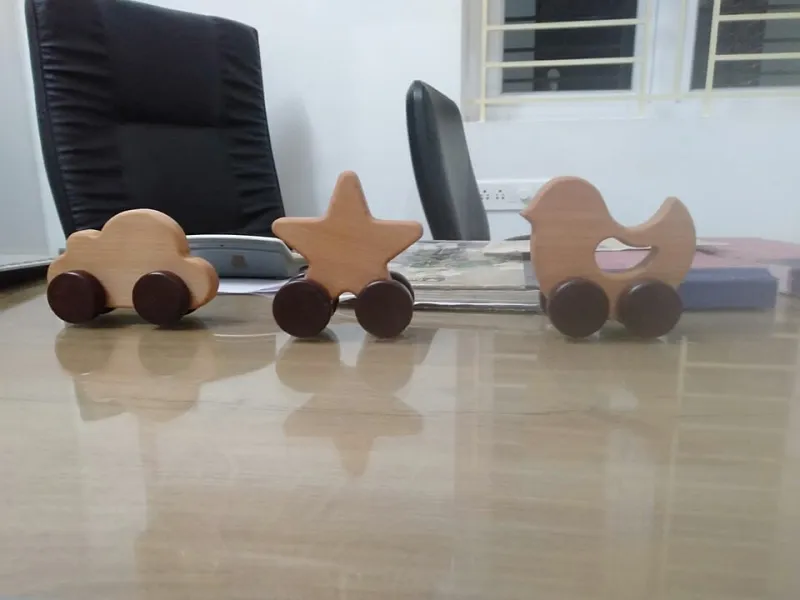
4. Two small vehicles, not twenty. A pair of die-cast cars or chunky wooden vehicles can turn a place mat into a car park, a road, or a rescue scene. The key is the number two. Two cars can race, park and chat. Twenty cars become a spillage. If your child is past the mouthing stage, a tiny set of wooden trains works just as well.
5. Finger puppets. A couple of finger puppets take up almost no room and can carry a whole story. They are especially good for children who need a bit of adult joining in. A fox and a frog can have a conversation about the menu, the weather, or why the chips are taking so long. Quiet, silly, and easy to wipe clean.
6. Lacing cards or a threading set. A small lacing card with a thick lace is a lovely table toy for three-to-five-year-olds. It keeps hands busy and asks for concentration without making a mess. Look for chunky cards with rounded corners and a lace long enough to thread but not long enough to become a trip hazard.
7. A search-and-find card deck. A deck of cards with hidden pictures or spotting challenges is brilliant for older children and adults alike. There are no loose pieces, the game can be paused, and it invites conversation rather than shutting everyone out. It is also the sort of thing that survives being shoved back into the bag.
8. A flip-book or tiny maze book. For a five-to-eight-year-old, a small flip-book or maze book is a quiet challenge that feels like a treat. It is not a screen, it does not need charging, and it can be put down when the food arrives. Choose one with clear pictures and a sturdy spine; restaurant tables are not gentle places.
9. A little wind-up toy. One small wind-up toy can be a lovely surprise at the end of a meal, especially if it walks, wobbles or flips. It is not the main event, and that is the point. It gives a child something to look forward to after the plates are cleared, and it takes up the space of a plum.
What to leave at home
Leave the noisy electronic toy with no volume switch. Leave the loose bead set, the pot of slime, and the paint-with-water book that needs a full water pot. Leave anything with more than twenty pieces, anything precious, and anything that will cause a meltdown if it falls on a restaurant floor. A going-out bag is not a toy box. It is a small, well-chosen kit for a specific job.
The small-shop advantage
This is where a proper toy shop earns its keep. Online listings are fine for ideas, but a good independent shop lets you pick something up, check the size, and ask whether the pieces really stay attached. At Jensen's Toys & Gifts, we like to think of it as a little bit of test-driving before the Sunday carvery. Buy one good thing rather than five forgettable things, and keep the bag on a rotation so the toys feel new again in a fortnight.
A final word on the wait
The wait is not the enemy. It is just a bit of time that needs a gentle shape. A small bag, three or four familiar toys, and a bit of adult silliness can turn a restless hour into a manageable one. Pack light, choose quiet, and keep a little surprise in the bottom of the bag for the moment the chips are late. That is the whole trick.