The Quiet Comeback of Wooden Toys (and Why Fewer Feels Like More)
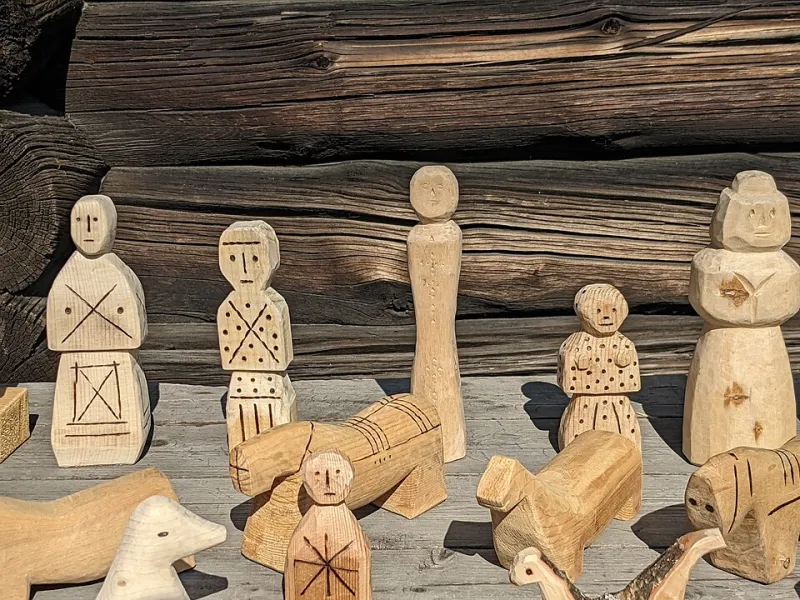
Photo: English: Andrew Krizhanovsky Русский: Андрей Крижановский, Public domain, via Wikimedia Commons
Something has shifted in the toy aisle. It is not a dramatic overhaul or a sudden rejection of plastic. It is quieter than that. More UK families are pausing before they buy, asking whether the toy will last, whether it will be played with beyond the first week and whether it will fit into a playroom that is already full. In 2026, wooden toys are benefiting from that pause.
This is not about being smug or setting up a wooden-toy shrine in the living room. It is about noticing that fewer, better playthings can make family life a little calmer. A wooden train set that gets handed down, a stacker that survives three children and a dolls' house that becomes a village across a decade all tell the same story: good toys have a long life.
Why wooden toys are having a moment
Part of it is durability. Wooden toys tend to survive drops, tug-of-war and the occasional trip down the stairs. They do not need batteries, they rarely need updating and they can be wiped clean after a jammy-handed play session. For families trying to buy less and choose better, that matters.
Part of it is sustainability. Parents are asking more questions about where toys come from, how they are finished and whether the wood is responsibly sourced. They are looking for FSC-certified timber, water-based paints and brands that publish clear information. No toy is perfect, but buying something designed to last is a practical way to reduce the cycle of break-and-replace.
And part of it is the play itself. Wooden toys often leave more room for the child to decide what happens next. A plain set of blocks can become a castle, a car park or a cake shop. A wooden figure can be a pirate, a doctor or a very tired parent. That open-ended quality is the opposite of a toy that does one clever thing and then sits on the shelf.
The charm is in the calm
There is a reason so many parents describe wooden toys as calming. They tend to be quieter, for a start. They do not flash, beep or demand attention. They sit in a basket and wait to be picked up. That low-key presence can make a playroom feel less like a jumble sale and more like a place where play can unfold at its own pace.
They also tend to encourage a different kind of focus. A child building with blocks is working on balance, patience and trial and error. A child threading wooden beads is practising fine motor skills without a screen telling them they are right or wrong. These are small, ordinary moments, but they add up.
None of this means plastic toys are the enemy. The humble plastic brick has earned its place in millions of homes, and many electronic toys bring joy, accessibility and skills that wooden toys cannot match. The point is balance. Wooden toys are simply one part of a mixed toy box that works for real family life.
What makes a good wooden toy
Start with the feel. A good wooden toy should be smooth, sturdy and pleasant to hold. Run your hand over the edges. Check the finish. Look for water-based paints and a clear age label. If a toy is meant for a baby, it should have no small parts that could come loose.
Then think about play value. Does it do one thing or many? A wooden rainbow can be stacked, sorted, used as a bridge for cars and turned into a tunnel for small figures. A wooden puzzle with chunky pieces can be a game, a story prompt and a sorting activity. The best wooden toys are simple enough to be used in several ways.
Finally, consider storage. A beautiful toy that has no home becomes clutter. Baskets, cotton bags and open shelves help. If a toy can be packed away in seconds, it is far more likely to be brought out again.
Age guide: what suits when
For babies and toddlers, look for smooth stacking rings, simple shape sorters, pull-along animals and chunky wooden blocks. These support grasping, coordination and cause and effect. Check that any paint or finish is child-safe and that there are no loose parts.
For three- to five-year-olds, pretend play comes into its own. Wooden figures, dollhouses, play food, tool benches and train sets all work well. This is the age when a child starts assigning roles and building small worlds, so fewer, more flexible pieces often beat a big set with a single purpose.
For five- to eight-year-olds, look for construction sets, marble runs, puzzles and open-ended building shapes. These support planning, problem-solving and the kind of deep play that can last an entire rainy Saturday.
For older children, wooden games, strategy puzzles and beautifully made desk pieces can still appeal. A well-designed wooden brain-teaser or a classic board game is a lovely antidote to screen time without making a big deal of it.
Small brands worth knowing
There are plenty of small and independent toy brands making thoughtful wooden playthings. Lanka Kade is known for fair-trade wooden figures and chunky puzzles. Le Toy Van makes classic dolls' houses, play food and wooden sets with a lovely traditional feel. Bigjigs offers wooden trains, puzzles and play sets that are easy to find in UK toy shops. PlanToys and Grimms are also popular with families looking for open-ended wooden play, though they tend to sit at the higher end of the price range.
It is worth checking your local independent toy shop too. Many stock smaller UK labels that do not appear in the big catalogues, and the staff often know exactly which toys suit which age. That kind of advice is hard to beat.
Buying tips for real life
First, check the safety marks. In the UK, look for UKCA or CE marking and read the age warning. A toy marked for three years plus is not suitable for a younger sibling who still mouths everything.
Second, buy for the child you have, not the playroom you wish you had. If your child loves vehicles, a wooden garage will earn its place. If they are a builder, invest in blocks. A beautiful toy that does not match their interests is just shelf decoration.
Third, start small. You do not need to replace the whole toy box in one go. One well-chosen wooden toy can change the mood of a play space. Add another at Christmas or a birthday, and let the collection grow slowly.
Finally, do not worry about perfection. Wooden toys can chip, stain and show their history. That is part of their charm. A few marks usually mean the toy has been loved, not that it has failed.
The bottom line
The wooden toy revival is not really about wood. It is about choosing playthings that last, that leave room for imagination and that make the playroom feel a little less frantic. In 2026, fewer, better toys are not a trend to follow slavishly. They are simply a sensible, lovely way to build a toy box that works for real family life.