Grandparent Gifts Without the Guesswork: A Kind Guide to Gentle Steering
Every family has a version of this scene. The door goes, there's a rustle of tissue paper, and out comes the fourth cuddly unicorn — or the enormous plastic castle that somehow looked smaller in the shop. Your child is thrilled for eleven minutes. Your hallway is now impassable. And your mum is beaming, because she has just done something lovely for her grandchild.
Nobody here is the villain. That's the first thing worth saying out loud, and probably the second and third too. Grandparents give big because they love big, and often because they remember a version of childhood that had fewer screens, fewer plastic bits, and considerably more room under the stairs. Redirecting that generosity isn't about saying no. It's about saying yes, and here's how to make it land.
Why the fourth unicorn stings more than it should
It isn't really about the unicorn. It's about the shelf it has to live on, the hour it takes to tidy, and the quiet knowledge that this particular cuddly toy will be ignored by teatime while a plain cardboard box gets three days of solid play.
Most parents I've chatted to say the same thing: they feel ungrateful for minding. So the gifts pile up, the guilt piles up with them, and everyone pretends the seventh tutu is a delight.
Permission slip, then: you're allowed to want the presents to work. A gift that gets played with is a gift that keeps giving — to the child, to the giver, and to whoever has to find it a home.
Lead with the thank-you, then the gentle nudge
The trick with scripts is warmth first, specifics second. Vague hints ('she's got loads already') land as criticism. A concrete suggestion lands as help.
A few that tend to go down well:
- The list hand-off: 'She'd absolutely love that — can I send you the little list we keep? It's got the things she's actually asked for, and it saves you guessing.'
- The pivot to a specific: 'Honestly, she's drowning in soft toys, but she's been obsessed with magnetic tiles since she played with them at her cousin's. That's the one thing on her list.'
- The size flag: 'One thing — we're really tight on floor space now the cot's gone. If you fancy going big, books or a day out would be a dream.'
- The split: 'Would you want to go halves with us on the big thing she's desperate for? Then you get the credit and we get the storage.'
If a face-to-face conversation feels awkward, a text works just as well. Something like: 'Quick one — I know you always spoil her rotten and she adores it. Would a list help? No pressure at all, just so nothing gets doubled up.' Nine times out of ten the reply is relief, not offence. Grandparents don't enjoy buying a dud either.
The shared wishlist that does the heavy lifting
This is the single most useful thing we've seen families do, and it costs nothing. Set up one shared note — the phone's default notes app is plenty — and call it something cheerful like 'Her Actual List'.
What goes in it:
- Eight to ten items, no more. A list of forty reads as a demand. A short list reads as a favour.
- Three loose tiers: asking for, would love, and saved for later. The last tier is where you park the £90 wooden kitchen for a future birthday.
- Real links and real prices, so nobody has to ring round three shops or accidentally spend double.
- A 'we've got plenty of' line at the bottom: teddies, plastic figures, dressing-up capes, anything in size 4–5.
- A photo of the child with the list, because it's lovely and because it makes the whole thing feel like a family thing rather than an invoice.
Share it with both sets of grandparents, any aunties who like to plan ahead, and update it twice a year — say, in September before the Christmas run-in and again a fortnight before the birthday. Add a note of what's already been bought as soon as it's bought, because half the problem is duplication.
Age-smart picks that still feel generous
A grandparent wants to feel they've given something substantial. That's the real need behind the giant castle. So offer substantial things that happen to be small, or that happen to be experiences.
Roughly 1 to 3
They don't care about the price tag, they care about the crunch of the paper. Indestructible board books, a stacking set, a decent shape sorter, a bubble machine, a chunky wooden puzzle. Suggest one lovely thing plus a book — it keeps the pile manageable and gives the grandparent a job on the day (they read it).
Roughly 4 to 6
This is peak 'big plastic' age, so it helps to name an alternative they can get excited about: a proper set of play dough with tools, magnetic tiles, a doctor's kit, a good set of felt tips and a fat pad of paper, a scooter, a small world play set with animals. Craft kits are brilliant here because they're consumable — the gift gets used up rather than stored forever.
Roughly 7 to 9
They want to feel grown-up. Micro-scooters, a decent backpack, a first watch, a proper puzzle of 300 pieces, a starter knitting or sewing kit, a book series in a box set, a small camera. This is also the age where a project beats a toy: a birdhouse to build, a seed-growing kit, a model to paint over three Saturdays.
Roughly 10 and up
Ask the child directly and put the answer on the list, verbatim. At this age a specific thing — a particular football shirt, a specific craft set, a decent pair of headphones — beats any amount of guessing. If the answer is 'money', that's allowed too, ideally towards something named.
The presents that don't need shelf space
Some of the best grandparent gifts are the ones you can't trip over. Zoo or aquarium membership, a theatre ticket for the panto, a pass to a local museum, a term of swimming, a train trip to somewhere with a decent chip shop. Wrap a printed 'voucher' with a photo of the place and a date already pencilled in — the anticipation does half the work.
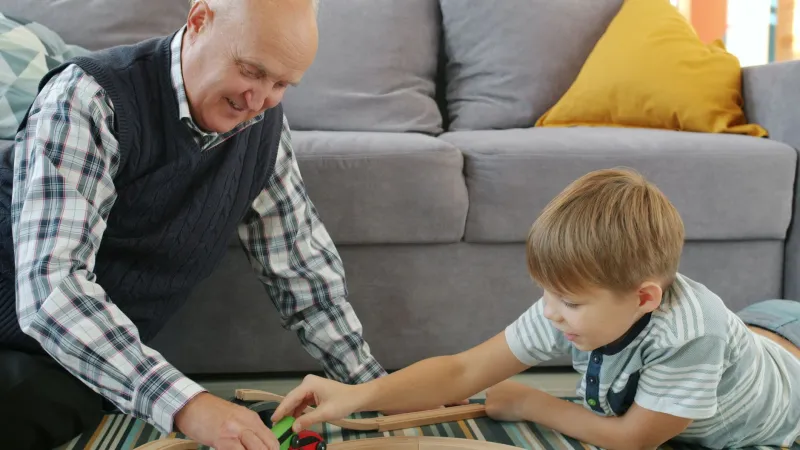
Print the ticket out, put it in an envelope with a handwritten note, and you've got something that feels far more special than another box. And if the grandparent is up for it, match the gift to a shared activity: a pottery afternoon, a fishing trip, a baking day at their kitchen. That's the stuff children remember at thirty.
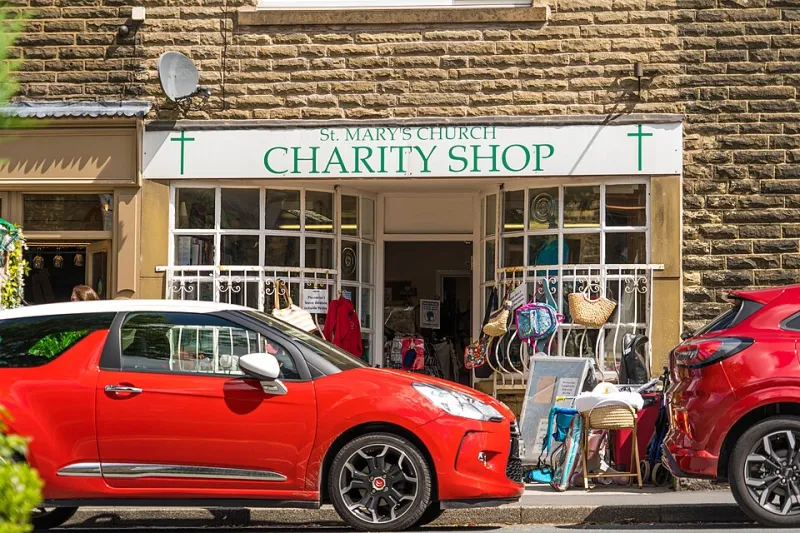
Small shops are a lovely fit here too. A local toy shop or gift shop will happily help a grandparent pick something well-made, wrap it properly, and steer them away from the giant castle. If you're lucky enough to have one nearby, name it on the wishlist: 'anything from the little shop on the high street' gives them room to choose and keeps the money local.
When the enormous thing arrives anyway
It will. Sometimes the list gets lost, sometimes the castle was already in the boot. In that moment, the goal is delight — for the child and for the giver. Say thank you properly, take a photo of the child mid-shriek, and save the practical conversation for another day.
Then, quietly, later: rotate it. Big items live better in a cupboard for three weeks and come out fresh than they do in permanent residence in the front room. If it truly doesn't work, pass it on to a charity shop or a local playgroup, and if the grandparent asks, be honest and kind — 'it was a bit big for our place, so it's gone to the playgroup where a whole room of children are using it.' That's not rejection. That's good manners and good stewardship.
The long game
What you're really building here isn't a gift policy, it's a habit of talking about presents openly. After two or three rounds, the wishlist becomes the default. Grandparents start sending you links before they buy. Everyone relaxes.
The goal was never fewer presents. It was better ones — the ones that get played with until the wheels fall off, by a child who's delighted and a grandparent who can see it happening.