Squeeze, Drain, Dry: Bath Toys That Stay Fresh (and the Ones to Skip)
Bath toys deserve more thought than they usually get. They live in the splash zone, get squeezed, squirted and abandoned in a puddle of lukewarm water, and then spend the next twenty hours in a dark, damp tub. It is no wonder some of them develop a smell that no amount of bubble bath can disguise.
The good news is that choosing better bath toys is not complicated. You do not need a laboratory or a degree in fluid dynamics. You need to look for a few design clues, adopt a routine that takes seconds, and know which classics are worth keeping and which are better left on the shelf.
The trouble with a squeezy toy
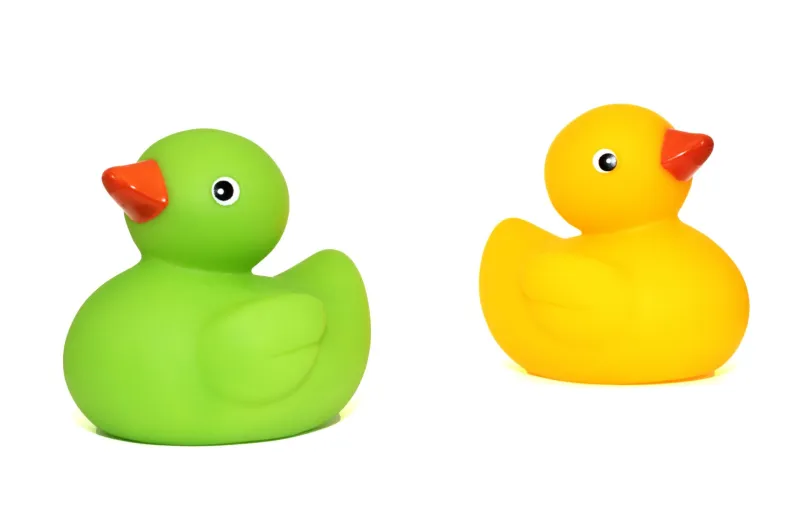
A rubber duck looks innocent. It bobs about, it squeaks, it has a friendly face. But many squeezy toys are hollow, sealed except for a small hole, and designed to take in water when little hands squeeze them. That water goes in easily and comes out reluctantly. The inside stays warm and wet, which is exactly the conditions mould enjoys.
You cannot always see it from the outside. A toy can look bright and clean on the shelf while hiding a murky surprise within. If a toy has a visible black speckling inside, a sour smell, or water that dribbles out brown when squeezed, it is time for the bin. No amount of rinsing will rescue a hollow toy that has been quietly brewing for months.
The lesson is not to ban bath toys. It is to favour designs that let water move through rather than settle. A toy that drains properly is a toy that dries properly, and a toy that dries properly is a toy you can feel good about handing over at bathtime.
What good drainage actually looks like
When you are browsing, turn the toy over. Look for two openings rather than one. A single small hole is a trap; two larger holes at opposite ends give water somewhere to go. Open-bottomed cups, colanders, sieves and pouring toys are naturally better because there is no hidden chamber for water to linger in.
Removable parts are another quiet hero. A boat with a cabin that lifts off, or a set of stacking cups that comes apart completely, can be rinsed and dried in minutes. Smooth seams and simple shapes help too. Every narrow crevice and decorative groove is another place for water to sit.
Solid moulded toys with no holes at all are the simplest option. They cannot fill up inside because there is no inside. For babies and younger toddlers, that is often the most sensible choice: bright, chunky, easy to wipe, and utterly uninterested in hiding a puddle.
The six-second after-bath routine
You do not need a special cupboard or a dedicated cleaning kit. A small routine, done while the bath is draining, makes a real difference.
First, shake each toy over the bath. Give it a firm wiggle so the main water comes out. Second, squeeze anything squeezable a few times, then shake again. Third, place toys somewhere airy rather than back in a closed basket or a sealed tub. A mesh hanging basket, a slatted rack or simply a row along the bath edge works well. Fourth, leave the bathroom door open for a while if you can. Moving air is the cheapest drying tool there is.
Once a week, give the whole lot a rinse in warm soapy water and let everything dry fully before it goes back. If a toy comes apart, take it apart every time. A few seconds now saves a grim discovery later.
A shortlist for babies, toddlers and early school age
For babies, think simple and sealed. Soft silicone teething toys that are designed for water play, chunky floating animals with no openings, and wipe-clean bath books are all good starting points. Avoid anything labelled as a squeaker for a baby who will inevitably put it in their mouth.
For toddlers, pouring and stacking toys come into their own. Open cups, small sieves, floating boats with removable pieces and suction spinner toys are brilliant because they are play-led and easy to drain. A simple set of coloured cups will often get more use than a battery-powered novelty that makes one noise and then sits in the corner.
For early school age, water wheels and pipe sets are the big winners. Look for pieces that come apart for cleaning and dry without hidden channels. Bath-safe dolls and animals can work well if they have a large drain hole or a removable plug, but check before you buy. If the only opening is a tiny squeaker hole, walk away.
The classics: keep or skip?
A classic rubber duck can still earn its place if it is solid, sealed and free of a squeaker hole. If it has a single small opening, it is best treated as a short-term favourite rather than a long-term resident.
Squeezy farm animals and squirting fish are usually more trouble than they are worth unless they have a removable base or a genuinely large drain hole. Bath books are excellent if they are wipe-clean and dry flat. Foam letters and shapes are cheerful, but they should be squeezed and dried thoroughly because they hold water in their pores.
Battery-powered bath toys can be fun, but they need to be sealed properly and dried carefully around any compartment. If water gets where it should not, the toy will not last long. For most families, the simplest toys are the ones that survive the years best.
A small-shop approach to bathtime
At Jensen’s Toys & Gifts, we like toys that earn their keep. A good bath toy does not need to be complicated. It needs to be easy to rinse, quick to drain and pleasant to hand over at the end of the day. Pick a few open, simple designs, give them a shake and a squeeze after every bath, and you will spend far less time wondering what is lurking inside the duck.
Bathtime is short. Choose toys that make it joyful, then let them dry properly — and leave the graveyard of mystery-squeezers behind.